
September is not a quiet month for health.
It is Suicide Prevention Month and World Alzheimer’s Month. It is stacked with cancer-awareness campaigns. It ends with World Heart Day. On the calendar that can look like a list of diseases. Used well, it is four weekends of ordinary practice.The through-line is simple.
Notice what is happening in the body, the mood, and the feed.
Prevent what can be prevented — isolation, all-day sitting, unchecked blood sugar, missed screening, another hour of doomscrolling.
Look after both body and mind, because they are not separate projects.
Each weekend this month we will post one small practice. The thinking behind those posts is here.
Stop scrolling. Step outside. Then open a book.
The first weekend of September gathers Digital Detox Day, National Play Outside Day, National Read a Book Day, Fight Procrastination Day, and the start of Suicide Prevention Week. They look unrelated until you put them in a line.
Doomscrolling is often delayed living: one more loop of bad news instead of a walk, a conversation, or sleep. Compulsive, hard-to-stop screen use is linked with worse mood and, in some studies, higher risk of suicidal thoughts or self-harm. Time in nature works in the other direction. It is associated with lower stress, better mood, and — in recent work — weaker suicidal thoughts, partly by reducing a sense of being trapped. Outdoor time with other people also builds belonging, one of the strongest protective factors against suicide. Reading, especially on paper or as audio rather than more phone-time, can interrupt rumination and lower stress.
None of that is a treatment. None of it replaces professional help. It is the same ground suicide-prevention work cares about: connection, a break from the loop, a body that has seen daylight.
If you or someone you know is in crisis, contact local emergency services or a suicide-prevention helpline (US: Suicide & Crisis Lifeline: 988 – available 24/7 by call, text, or chat (English and Spanish). UK and Ireland: Samaritans 116 123 – free to call 24/7, 365 days a year from landlines and mobiles).
Notice the symptom. Keep the appointment. Then look after the person.
September carries several cancer-awareness months at once — blood, childhood, prostate, thyroid and others. Awareness is not a colour or a hashtag. It is attention: changes in the body, overdue checks, and the people around a diagnosis.
Not every cancer may be preventable. Many risks still are: not smoking, moving, drinking less, sleeping, not spending the evening inside a feed. Prevention here is ordinary and repeated, not a perfect lifestyle. A diagnosis is medical and mental at the same time. Company, a walk, a meal, a lift to an appointment — these look small next to treatment, and they are part of care. The same analogue habits from the first weekend help patients and carers: less rumination, more human contact.
Notice changes. Do not leave people to age alone.
World Alzheimer’s Month runs all of September. World Alzheimer’s Day is 21 September. Healthy Aging Month sits beside it. Aging well is physical, cognitive and social. Isolation makes every part of that harder.
The first job is to notice memory changes, withdrawal, missed conversations, and carers who have gone quiet. Early attention gives families more room to act.
There is a second, more specific version of notice. Neurologist Dale Bredesen treats cognitive decline as many leaks in one roof: insulin resistance, inflammation, poor sleep or apnoea, nutrient and hormone gaps, toxins, infections, isolation. His protocol starts with screening those contributors, then using a personalised mix of diet, fasting windows, exercise, sleep, stress reduction, brain training and targeted treatment. In a 2022 proof-of-concept study, most participants with mild cognitive impairment or early dementia improved or stabilised on cognitive tests, and markers such as inflammation, blood sugar and vitamin D often moved in a better direction. A 2025 multi-site randomised trial has been posted as a preprint claiming the protocol group improved while standard care declined. That work is still going through review. Major Alzheimer’s organisations still say “reversal” is not proven, and later-stage disease is much harder to shift.
The honest takeaway is not that decline is not only fate, and a single pill is not the only lever. Measure what you can measure with a clinician. Then look after metabolism, sleep, movement and connection — for the person and for the carer. Daylight, conversation and a page of a book are kinder inputs for an aging brain than another hour of news.
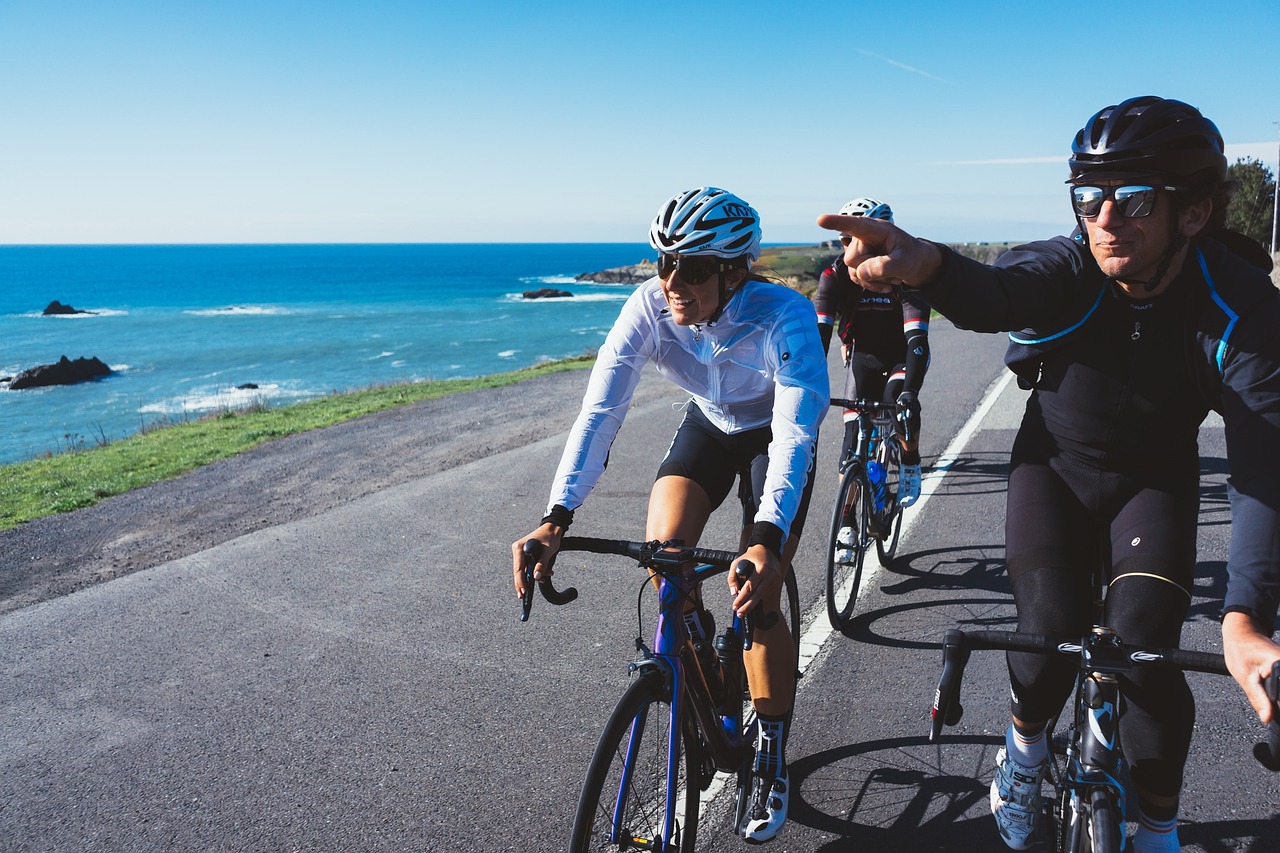
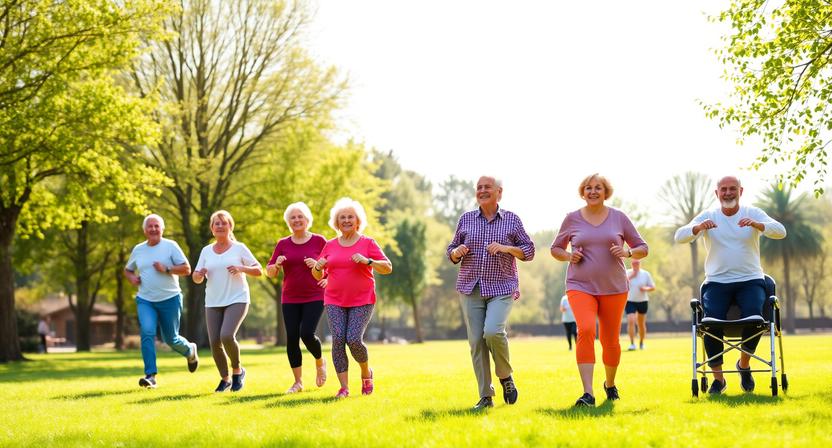
Move for the heart, with other people, in daylight.
Family Health and Fitness Day falls on 26 September. World Heart Day is 29 September. This is the practical close of the month: the same habits as the first weekend, now with a pulse.
Heart health starts with noticing risk-increasing patterns — including days of screens, little daylight, few people — not with a heroic gym plan. Movement, outdoor time, sleep, not smoking, and less late-night scrolling all support the heart. So does company. Loneliness and all-day sitting are not small extras. Exercise is medicine for mood as well as arteries. World Heart Day is not only cardio. It is a life with daylight and other people in it.
The month of September on one page
| Weekend | Notice | Prevent | Look after body and mind |
|---|---|---|---|
| 5–6 Sep | The scroll, the stall, the isolated evening | Doomscrolling, delay, rumination | Outside + people + a book |
| 12–13 Sep | Symptoms, overdue checks, quiet carers | Missed screening, smoking, sitting | Support the person, not only the diagnosis |
| 19–20 Sep | Memory change, isolation, unmeasured drivers | Loneliness, poor sleep, metabolic drift | Walk, talk, screen, keep the mind in use |
| 26–27 Sep | How sitting and screens feel in the body | Inactivity, loneliness, late-night feeds | Move outdoors, together, in daylight |
September will still be full of awareness months. The work underneath them is the same: notice what is happening, prevent the drift you can see, and look after both body and mind with something analogue — daylight, movement, a person, a page.
REFERENCES
These sources support the claims in the post. The Bredesen papers report cognitive improvement in small or early-stage samples; more studies being carried out at the moment. Exercise and time outdoors are linked with better mood and, in some studies, lower suicidality.
Bredesen, D. E. (2014). Reversal of cognitive decline: A novel therapeutic program. Aging, 6(9), 707–717. https://www.aging-us.com/article/100690
https://pubmed.ncbi.nlm.nih.gov/25324467/
Toups, K., Hathaway, A., Gordon, D., Chung, H., Raji, C., Boyd, A., Hill, B. D., Hausman-Cohen, S., Attarha, M., Chwa, W. J., Jarrett, M., & Bredesen, D. E. (2022). Precision medicine approach to Alzheimer’s disease: Successful pilot project. Journal of Alzheimer’s Disease, 88(4), 1411–1421. https://pubmed.ncbi.nlm.nih.gov/35811518/
https://doi.org/10.3233/JAD-215707
Hellmuth, J. (2020). Can we trust The End of Alzheimer’s? The Lancet Neurology, 19(5), 389–390. https://pmc.ncbi.nlm.nih.gov/articles/PMC7377549/
White, M. P., Alcock, I., Grellier, J., Wheeler, B. W., Hartig, T., Warber, S. L., Bone, A., Depledge, M. H., & Fleming, L. E. (2019). Spending at least 120 minutes a week in nature is associated with good health and wellbeing. Scientific Reports, 9, 7730. https://www.nature.com/articles/s41598-019-44097-3
Zhao, D., Yang, Y., Sedikides, C., Han, Y., Hou, X., Yang, L., & Wang, L. (2025). Preventing suicide naturally: Connection with nature attenuates suicidal thoughts (mostly) by decreasing entrapment. Journal of Environmental Psychology, 107, 102786. https://doi.org/10.1016/j.jenvp.2025.102786
Office of the U.S. Surgeon General. (2023). Our epidemic of loneliness and isolation: The U.S. Surgeon General’s advisory on the healing effects of social connection and community. U.S. Department of Health and Human Services. https://www.hhs.gov/surgeongeneral/reports-and-publications/connection/index.html
Holt-Lunstad, J., Smith, T. B., Baker, M., Harris, T., & Stephenson, D. (2015). Loneliness and social isolation as risk factors for mortality: A meta-analytic review. Perspectives on Psychological Science, 10(2), 227–237. (Cited in the Surgeon General advisory; isolation linked to higher premature mortality.)Fabiano, N., et al. (2023). Exercise and suicide attempts: A meta-analysis of randomized trials. Reported in Journal of Affective Disorders / coverage: physical exercise associated with fewer suicide attempts versus inactive controls. https://www.medscape.com/viewarticle/990766
White, R. L., Babic, M. J., Parker, P. D., Lubans, D. R., Astell-Burt, T., & Lonsdale, C., updated in White et al. (2026). Domain-specific physical activity and mental health: An updated systematic review and multilevel meta-analysis in a combined sample of 3.3 million people. British Journal of Sports Medicine, 60(4), 267. https://bjsm.bmj.com/content/60/4/267
(Leisure-time exercise is the activity domain most consistently tied to better mental health.)
Chen, J., et al. (2024). Association between a changeable lifestyle, sedentary behavior, and suicide risk: A systematic review and meta-analysis. Journal of Affective Disorders, 350, 974–982. https://www.sciencedirect.com/article/pii/S016503272400212X
(Sitting more is linked with higher odds of suicidal ideation, plans and attempts.)